|
Key Takeaways: Learn about the differences between these two pool sanitation systems; Salt Systems and Chlorine only. This article will help you learn about the benefits of each of these pool systems and help you decide which is best for your pool. |
Salt System Pool Equipment Upgrades vs. Chlorine Only Pool Systems
When it comes to pool sanitation, homeowners today have more options than ever before. Salt system pool equipment upgrades are becoming increasingly popular compared to traditional chlorine pools due to their convenience, water quality, and long-term cost savings. Understanding the difference between these two pool systems can help you decide which option is best for your pool.
What Is a Salt System Pool?
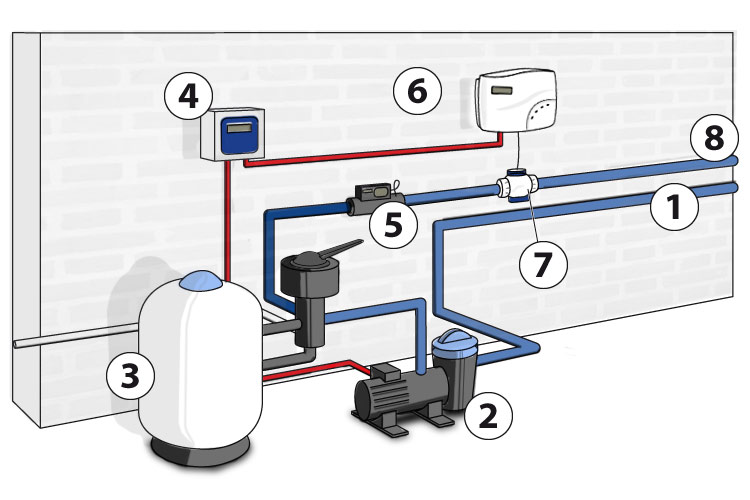
A salt system/saltwater pool is not chlorine-free but instead uses a piece of equipment called a salt chlorine generator to convert salt into chlorine through a process called electrolysis. Water from the pool that contains sodium chloride (salt) enters the cell where an electric charge is applied to turn chloride ions into gas. This gas then dissolves into pure chlorine water that is pumped back into the pool, continuously producing chlorine to sanitize the pool water. This automated process keeps chlorine levels more consistent and reduces the need to manually add chlorine tablets or liquid.
What are the Benefits of a Salt System Pool
Salt systems provide several advantages for pool owners over traditional chlorine pools. Salt systems do typically cost more upfront, but they often cost less to maintain over time and require less hands-on maintenance. Other benefits include:
- Softer-feeling water that is gentler on skin and eyes
- Less strong chlorine smell
- Lower long-term chemical costs
- Consistent chlorine levels
- Less day-to-day maintenance
- No need to store or handle chlorine chemicals
- Reduces red eyes, dry skin, and faded swimsuits

Salt System vs. Chlorine Pool Comparison
| Feature | Salt System Pool | Chlorine Pool |
|---|---|---|
| Chlorine Source | Generated from Salt automatically | Manually added (tablets/liquid) |
| Maintenance | Lower day-to-day | Higher (regular chemical balancing) |
| Water Feel | Lower day-to-day | Harsher on skin and eyes |
| Smell | Minimal chlorine smell | Strong chlorine smell |
| Upfront Cost | Higher | Lower |
| Long-Term Cost | Lower | Higher |
| Automation | Yes | No |
| Chemical Handling | Minimal | Frequent |
Salt System Brand Comparison: Hayward vs. Pentair vs. Jandy
| Brand | Known For | Best Features | Ideal For |
|---|---|---|---|
| Hayward | Reliability & Affordability | Easy Controls, widely compatible, cost-effective | Residential Pools |
| Pentair | Advanced Technology | Smart automation, diagnostics, energy efficiency | High-tech/automated pools |
| Jandy | Premium Systems | Durable cells, automation integration | Luxury pool systems |
| Warranty | Hayward: Good | Pentair: Good | Jandy: Good |
| Automation Compatibility | Yes | Excellent | Excellent |
Which System is Right for My Pool?
For modern homeowners, especially in coastal climates, a salt system upgrade is typically the better long-term investment. The reduced maintenance and improved swimming experience tend to quickly outweigh the higher upfront cost.
Quick Decision Matrix
| If You Want… | Best Choice |
| Lowest upfront cost | Chlorine |
| Lowest long-term maintenance | Salt |
| Softer, more comfortable water | Salt |
| Full control over chemicals | Chlorine |
| Less daily involvement | Salt |
| Simpler equipment setup | Chlorine |
Pool Equipment Upgrades in Hampton Virginia
At Fox Pools LLC our professional pool salt system installation service in Hampton Roads, provides pool owners with salt systems from the best brands in the business including Hayward, Jandy and Pentair. Continuously sanitize your pool while enjoy the many benefits of a salt system pool equipment upgrade; convenience, comfort, and long-term savings. Call Fox Pools LLC today to learn more about this popular and valuable pool equipment upgrade.
Hayward Salt Systems
Hayward salt systems are known for dependable performance and user-friendly controls. They are widely used in residential pools and integrate well with Hayward automation platforms.
Jandy Salt Systems
Jandy salt systems are engineered for seamless automation and premium performance, making them ideal for pools with advanced control systems.
Pentair Salt Systems
Pentair salt systems are known for advanced monitoring and long-term reliability. They are a top choice for homeowners seeking high efficiency and smart system control.
Frequently Asked Questions: Salt Systems vs. Chlorine Pools
What is the downside of a salt water pool?
The main downsides of a saltwater pool are the higher upfront cost and the need to maintain the salt cell. Salt systems also require occasional cleaning to prevent calcium buildup and the cell will eventually need replacement (typically every 3–7 years). In some cases, salt can be mildly corrosive to certain pool materials or surrounding fixtures if not properly managed.
Is a pool salt system worth it?
For most homeowners, yes a salt system is worth it. While the initial investment is higher, the long-term savings on chemicals, reduced maintenance, and improved swimming comfort often outweigh the upfront cost. Salt systems are especially valuable for homeowners who want a more automated and low-maintenance pool experience.
What’s the best salt system for a pool?
The best salt system depends on your pool size, usage, and desired features. Leading manufacturers like Hayward, Pentair, and Jandy all offer reliable options. The “best” system is one properly sized and matched to your pool equipment.
- Hayward: Great balance of affordability and reliability
- Pentair: Best for advanced automation and smart features
Jandy: Ideal for premium, fully integrated pool systems
What is the healthiest pool system?
A saltwater pool is often considered one of the healthiest options because it maintains more stable chlorine levels and produces fewer harsh chloramines (the compounds responsible for strong chlorine smells and irritation). That said, a properly maintained chlorine pool can also be safe and healthy. The key factor is consistent water balance and sanitation, not just the system type.
How long do pool salt systems last?
Most salt systems last 5–10 years overall, but the salt cell (the main working component) typically lasts 3–7 years before needing replacement. Proper maintenance, especially keeping water chemistry balanced can extend the lifespan.
What are the disadvantages of chlorine pools?
They are effective, but more labor-intensive to maintain. Chlorine pools come with a few common drawbacks:
- Require frequent manual chemical adjustments
- Strong chlorine smell (from chloramines)
- Can cause eye and skin irritation
- Ongoing cost of chlorine products
- Less consistent sanitation if not closely monitored
Are salt pools better than chlorine?
Salt pools are generally considered “better” for comfort and convenience, while chlorine pools are better for lower upfront cost and simplicity. For most homeowners today, salt systems are preferred for ease of use.
What is the healthiest pool system?
The healthiest pool system is one that maintains stable sanitizer levels with minimal irritation. Salt systems often come out ahead because they, produce chlorine more consistently, reduce chloramine buildup, provide a more comfortable swimming experience.
How toxic are chlorinated pools?
Chlorinated pools are not toxic when properly maintained. The chlorine levels used in pools are regulated to safely disinfect water without harming swimmers. Properly balanced pools are safe for regular use.
Can you get sick from a chlorinated pool?
Yes, but it’s uncommon in properly maintained pools. Well-maintained pools with proper chlorine levels are very safe.
Do modern swimming pools use chlorine?
Yes almost all modern pools use chlorine in some form. Even saltwater pools generate chlorine through their salt system. Chlorine remains the most effective and widely used sanitizer for keeping pool water safe.
Is it okay to swim in a chlorine pool every day?
Yes, it is generally safe to swim in a chlorine pool every day, as long as the water is properly balanced. Saltwater pools may be more comfortable for daily swimmers, but both options are safe when maintained correctly.